

Among all the aspects of equestrian life, technique, discipline, strength, and patience, the most powerful force I’ve encountered is the rider-horse emotional connection. It goes far beyond reins and stirrups. It’s a language of trust, empathy, and deep awareness that shapes every moment I spend in the saddle or on the ground.
This connection isn’t forged overnight. It’s built ride by ride, breath by breath, in the quiet space between heartbeats and hoofbeats. It’s what transforms a mechanical ride into a fluid conversation. It’s what makes horses more than athletes, they become partners, mirrors, and companions. Through my own journey, I’ve come to believe that nurturing the emotional bond is just as important as perfecting a flying lead change or sitting the trot.
Building Trust From The Ground Up
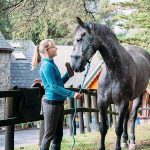
Before any ride, I always take a few minutes just to be with my horse. No tack, no agenda. Just presence. I might groom slowly, run my hand along his neck, or stand beside him in silence. These moments, though simple, lay the foundation for everything that follows.
Trust doesn’t begin in the saddle. It begins when I show up with calm energy and consistency. Horses are deeply intuitive, and they feel the truth of our intentions. If I’m distracted, tense, or emotionally distant, my horse picks up on it immediately.
Over time, I’ve learned that the rider-horse emotional connection grows stronger when I show up authentically, whether I’m feeling joyful, anxious, or uncertain. Horses respond to honesty. That’s where trust begins.
Communication Without Words
Some of the most meaningful conversations I’ve had with my horse have been wordless. A shift in weight. A softening of my hand. A pause in movement that says, “I’m listening.”
The rider-horse emotional connection relies on subtle cues and mutual awareness. When I focus more on how I feel rather than what I do, my horse responds more willingly. He senses my energy before he notices my aids. That’s why emotional congruence matters, if I ask for softness with tension in my body, he feels the contradiction.
Through consistent effort, I’ve learned to listen more with my body than my voice. I notice his breathing, his eyes, the way he flicks his ears when something changes in the environment. These tiny details guide how I adjust my ride and build our dialogue.
Patience As A Path To Partnership
Impatience has no place in meaningful horsemanship. I used to get frustrated when progress felt slow, or when my horse didn’t understand what I was asking. But the more I focused on the rider-horse emotional connection, the more I realized that patience isn’t just a virtue, it’s a requirement for partnership.
There are days when my horse doesn’t want to work, or when a movement we’ve practiced for weeks still feels out of sync. Those moments used to feel like failures. Now, I treat them as opportunities to deepen the bond. Sometimes, I dismount and do groundwork instead. Other times, we go for a walk or simply stand together in the field.
Patience tells my horse, “I see you. I hear you. I’m willing to wait until we’re both ready.” That kind of emotional respect strengthens the connection more than any perfect ride ever could.
Shared Energy In The Arena
I’ve ridden in arenas where I felt invisible to my horse, where we were going through the motions but not truly connected. And I’ve had rides where we moved like a single being, where his thoughts were my thoughts and vice versa. The difference almost always came down to emotional presence.
When I’m emotionally aligned, with my horse, my intention, and the rhythm of the ride, I feel a sense of flow. My aids become lighter. My horse’s responses become quicker and more fluid. We’re not just performing movements; we’re moving in harmony.
The rider-horse emotional connection thrives in this shared energy. It’s not about dominance or control. It’s about mutual awareness and the willingness to respond rather than force.
Learning Through Setbacks
One of the most profound moments in my riding journey came after a fall. It shook my confidence and made me question everything. But instead of pulling away emotionally, I leaned into the connection.
I spent more time walking, grooming, and simply being with my horse. We rebuilt our rhythm slowly. With every ride, I spoke to myself with more kindness, and I communicated more gently with him. In return, he met me with quiet steadiness. It was a reminder that healing and progress are intertwined with emotion.
Setbacks can either create distance or deepen the rider-horse emotional connection. It all depends on how we show up after the fall. In my case, vulnerability opened the door to even greater trust.
Emotions As Feedback, Not Obstacles
Riding stirs up a lot of emotion, fear, pride, frustration, joy. I used to think I had to suppress those feelings to be an effective rider. But I’ve come to see them as valuable feedback.
If I feel tense, it’s usually because something feels unclear or unsafe. If I feel overwhelmed, it might be time to simplify or slow down. My horse feels those emotions too, and he responds to them before I even speak.
By acknowledging and managing my emotions, I create a more stable environment for my horse. That emotional stability becomes part of our communication. When I stay grounded, he learns to trust not just my cues, but my leadership.
The rider-horse emotional connection depends on this mutual feedback loop. We’re constantly responding to each other, not just through our bodies, but through our emotional states.
Daily Practices That Strengthen The Bond
Building this connection is not a one-time event. It’s a daily practice. Here are a few rituals that have helped me stay emotionally connected to my horse:
- Start with stillness: Before every ride, I spend a moment just breathing and being present with my horse.
- End with gratitude: After each session, I thank my horse, verbally or with a pat, and reflect on something that went well.
- Journal the journey: I keep a riding journal, not just for training notes but for emotional reflections, what I felt, what my horse felt, and what I learned.
- Mix up the routine: Trail rides, liberty work, or hand-walking sessions help keep our relationship fresh and prevent burnout.
- Speak softly: I talk to my horse throughout the ride. My tone matters more than the words. He knows when I’m being encouraging, and it shows in his ears and expression.
These simple habits help keep our relationship rooted in intention and mutual respect.
Emotional Connection Across Disciplines
I’ve seen this emotional bond thrive in many disciplines, dressage, jumping, eventing, trail, and more. It’s not limited by discipline; it’s shaped by mindset. Whether we’re training for competition or riding bareback in the field, the emotional thread we share is the same.
What changes is how we prioritize it. In high-pressure settings, it’s easy to get caught up in scores or results. But I’ve found that my best performances come when I focus less on precision and more on connection.
In every setting, the rider-horse emotional connection is what carries us through. It’s what keeps my horse willing to try, even when he’s unsure. It’s what gives me the courage to trust, even when I’m afraid.
Teaching Emotional Awareness To Young Riders
When I work with younger or less experienced riders, I encourage them to think beyond mechanics. I ask questions like, “How did that feel?” or “What do you think your horse was trying to say?” These conversations teach emotional awareness.
Helping kids and teens see their horses as emotional beings fosters empathy and patience. It also sets them up for a lifelong relationship based on partnership, not pressure.
Positive reinforcement, calm consistency, and soft presence go a long way. Teaching the value of the rider-horse emotional connection early on shapes not only better riders, but better horse people.
Reflecting On The Journey Together
Some of my favorite memories are not of blue ribbons or clear rounds, they’re of quiet moments: my horse lowering his head into my chest after a long day, the warm breath on my shoulder as I remove his halter, the shared rhythm of walking side by side.
These memories are stitched together by emotion, not achievement. They’re the true markers of a strong bond.
The rider-horse emotional connection doesn’t come with fanfare. It’s subtle, intimate, and built over time. But once it’s there, it colors everything. It turns a routine ride into something meaningful. It transforms a schooling session into a shared experience. And it gives both horse and rider the confidence to keep growing together.
Final Thoughts
The more time I spend with horses, the more I understand that technique and talent are only part of the story. The rider-horse emotional connection is what brings everything to life. It’s what makes riding not just a sport, but a relationship.
Every time I approach my horse, I remind myself that he’s not just responding to my aids, he’s responding to my heart, my energy, and my intention. When those things are in harmony, magic happens.
So if you’re seeking more depth in your riding, more ease in communication, and more joy in the journey, start with connection. Speak with your presence. Listen with your body. Honor the relationship with every breath.
That’s where true horsemanship lives.